licking 4’33”
video performance
2025
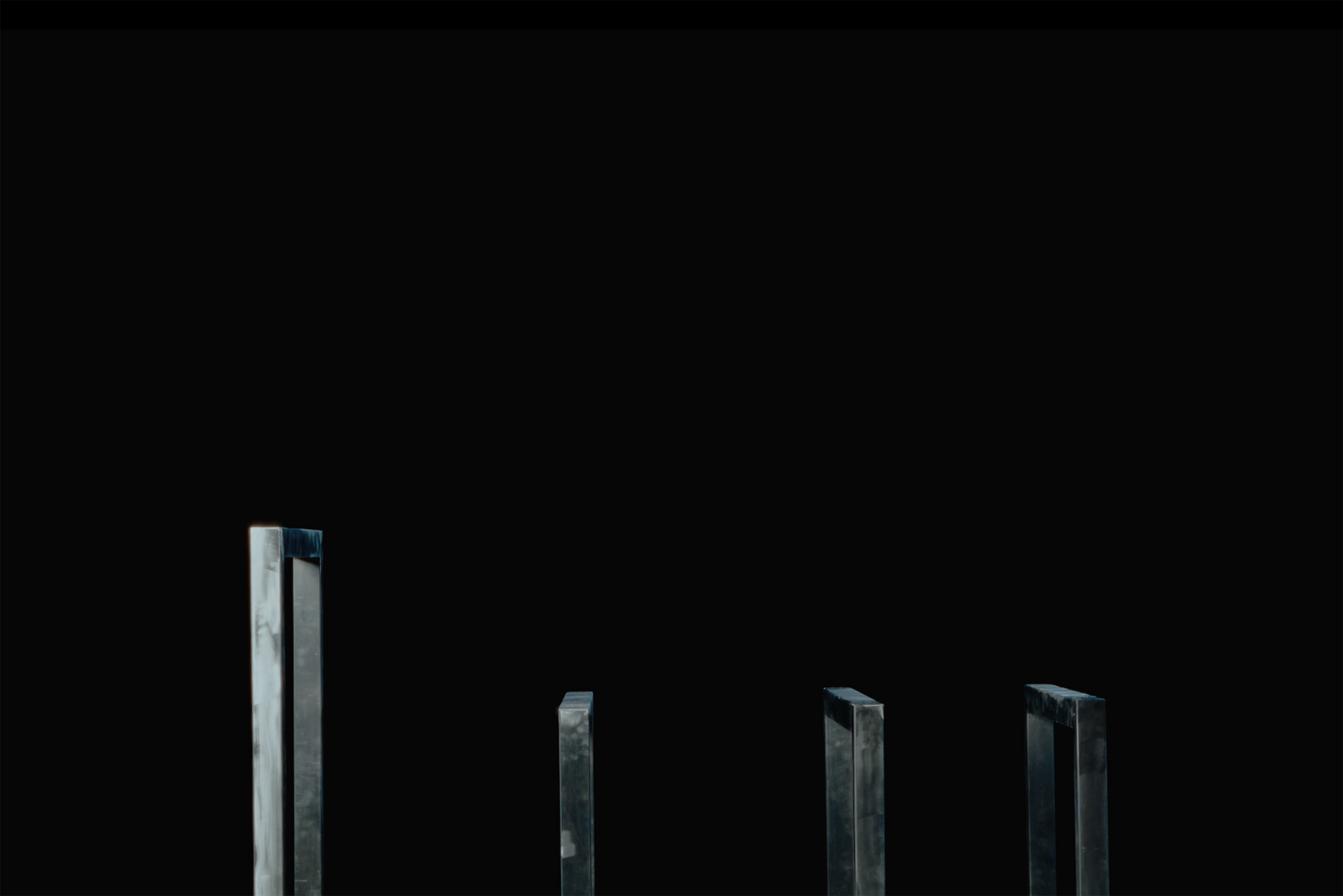
A metal frame against a black background – empty for a moment longer, like a stage in a theatre before the performance begins, or a podium on which winners will soon appear. Or perhaps barriers placed crosswise: an uncertain boundary between viewer and viewed. A rack, a tower or a tray, and upon it – Daniel Kotowski, rendered in silver.
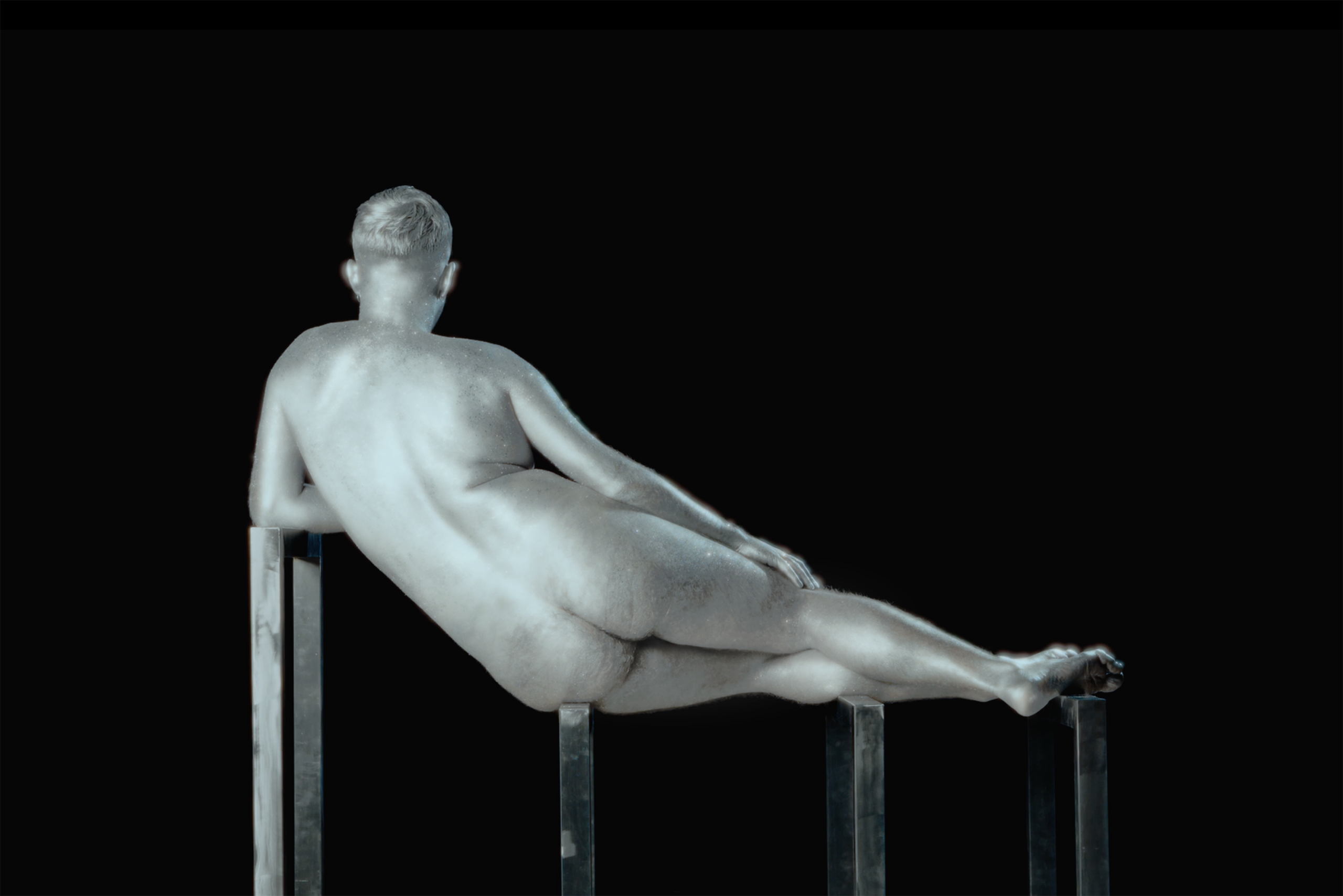
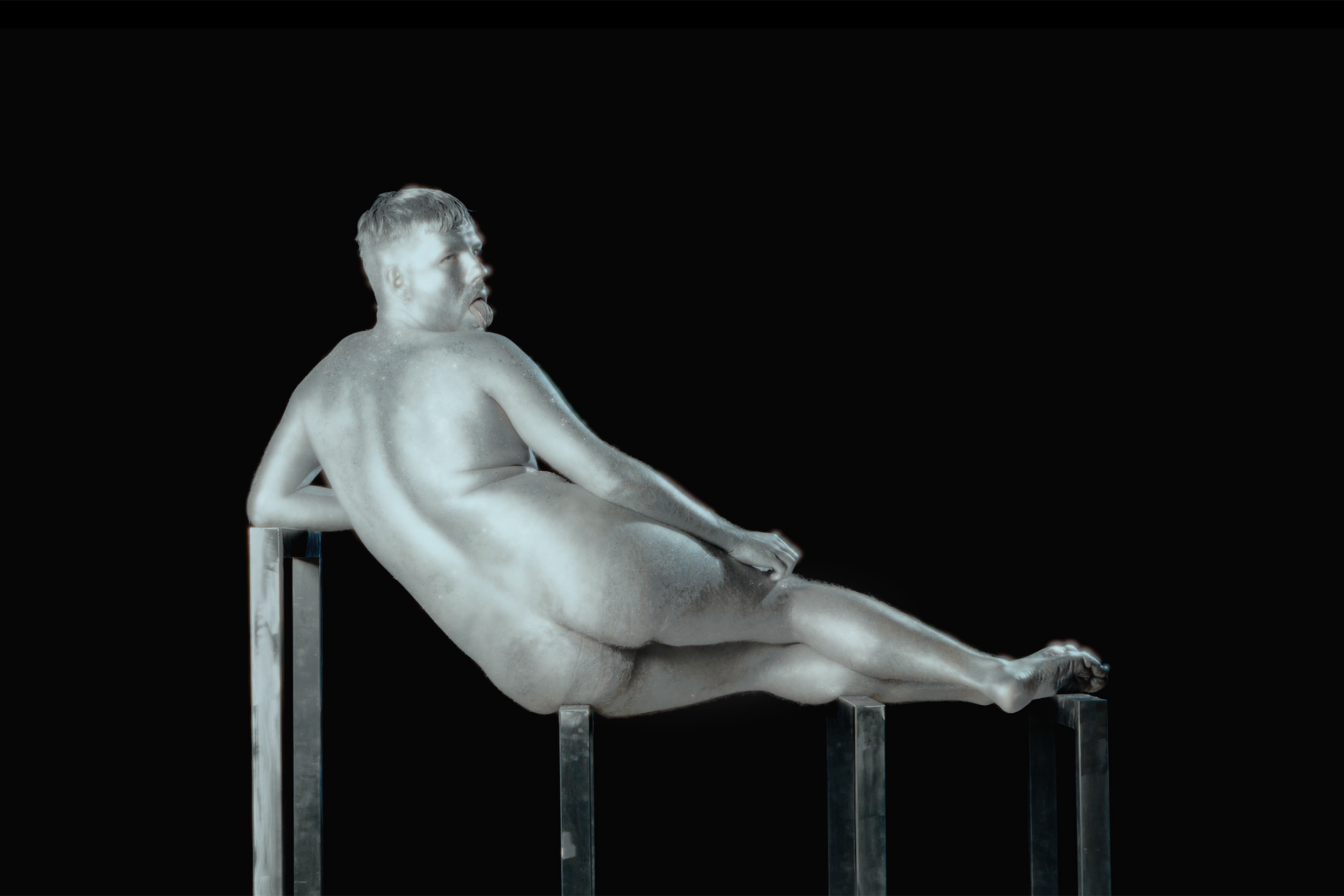
With his back turned to the audience, stretched across the frame, he tries not to move, yet the uncomfortable structure presses into his body, which begins to tremble. Tentatively, the artist extends his tongue, catching the air, searching for something in space. A hand moves heavily across the body, as though it were a stand-in for the tongue, ready to replace it in an impossible task. The lips grow dry, but do not stop. At last, the artist allows his tongue to lick his hand – the index finger, the back of the hand, the middle finger. Learning, seduction, resistance.
In this video performance, Kotowski restages a painterly composition well known from the history of art: the odalisque. He is particularly drawn to Jean-Auguste-Dominique Ingres’s La Grande Odalisque (1814), in which the pearly back of a woman illuminates the darkness of the canvas. Her head tilts slightly backwards, her gaze fixed into the distance. The figure of the enslaved woman of an Ottoman ruler permeated the imagination of nineteenth-century Europe, reflecting the era’s fascination with Orientalism. The odalisque was always nude, reclining, defenceless.
The work’s title – as well as the duration of the three parts of the performance – refers to John Cage’s modernist composition, conceived in the late 1940s and first performed in the early 1950s. In 4’33”, Cage treated silence as a fully-fledged element of the musical work: for four minutes and thirty-three seconds, the performer produces no sound, while the “music” becomes the ambient noise and the audience’s responses. Cage later stated that “there is no such thing as silence”, and the work acquired legendary status. Repeatedly performed and reinterpreted, it continues to operate somewhere between the sphere of the sacred and the realm of internet memes.
Kotowski parodies two major figures from art history and rewrites them through the experience of a Deaf person. He wants us to look at him as though he were an odalisque – an exoticised object of desire. A stripped little doll, a silver coin, a decoration. An object that does not fit the whole, always distant and strange.
It is hardly surprising, then, that Kotowski turns to 4’33”, drawing attention to the social and political dimensions of silence – especially in the context of the invisibility and inaudibility of Deaf people. In the imagination of hearing society, silence often takes the form of fetish, trauma or mystical experience. Yet these projections rarely have anything to do with the actual experience of Deaf people. Silence and exoticism exist as concepts or phenomena produced in opposition to what is perceived as natural. What unites them is a gaze that comes from within – from the majority, the centre, from power.
Listen closely, and let yourself be seduced by this Deaf siren draped across the frame. Her body is her language, a fleshy, wet organ moving towards the shore.
text by Michał Grzegorzek
performance: Daniel Kotowski
film, editing: Michał Dobrucki
film, sound: Kuba Szkudlarek
text: Alicja Kobielarz
body art: Maja Wasilewska, Tomasz Stefaniak
frame construction: Bartek Buczek
Project realised as part of the Opera for the Deaf festival, organised by Automatophone Foundation, Krytyka Polityczna and Zachęta – National Gallery of Art.