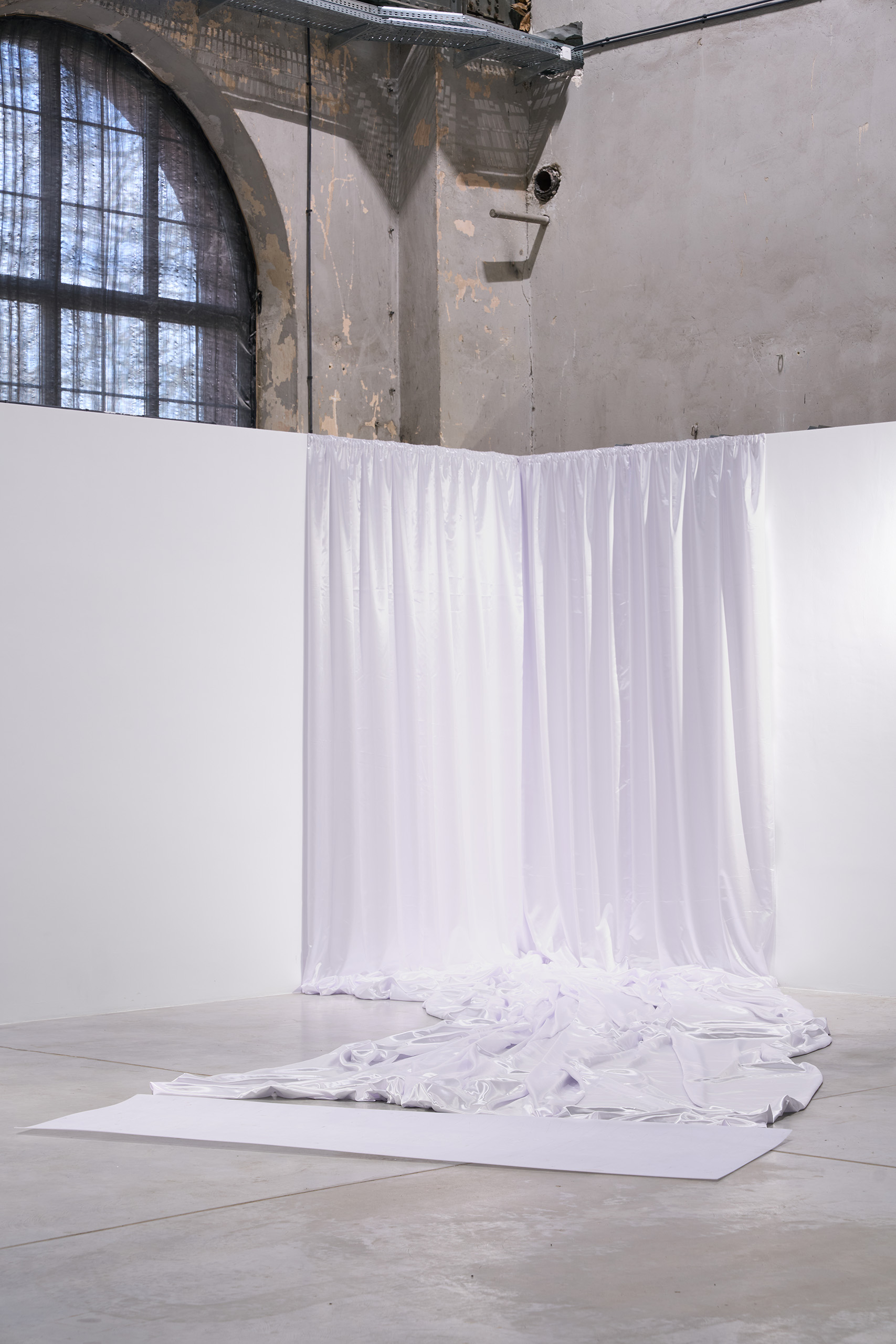
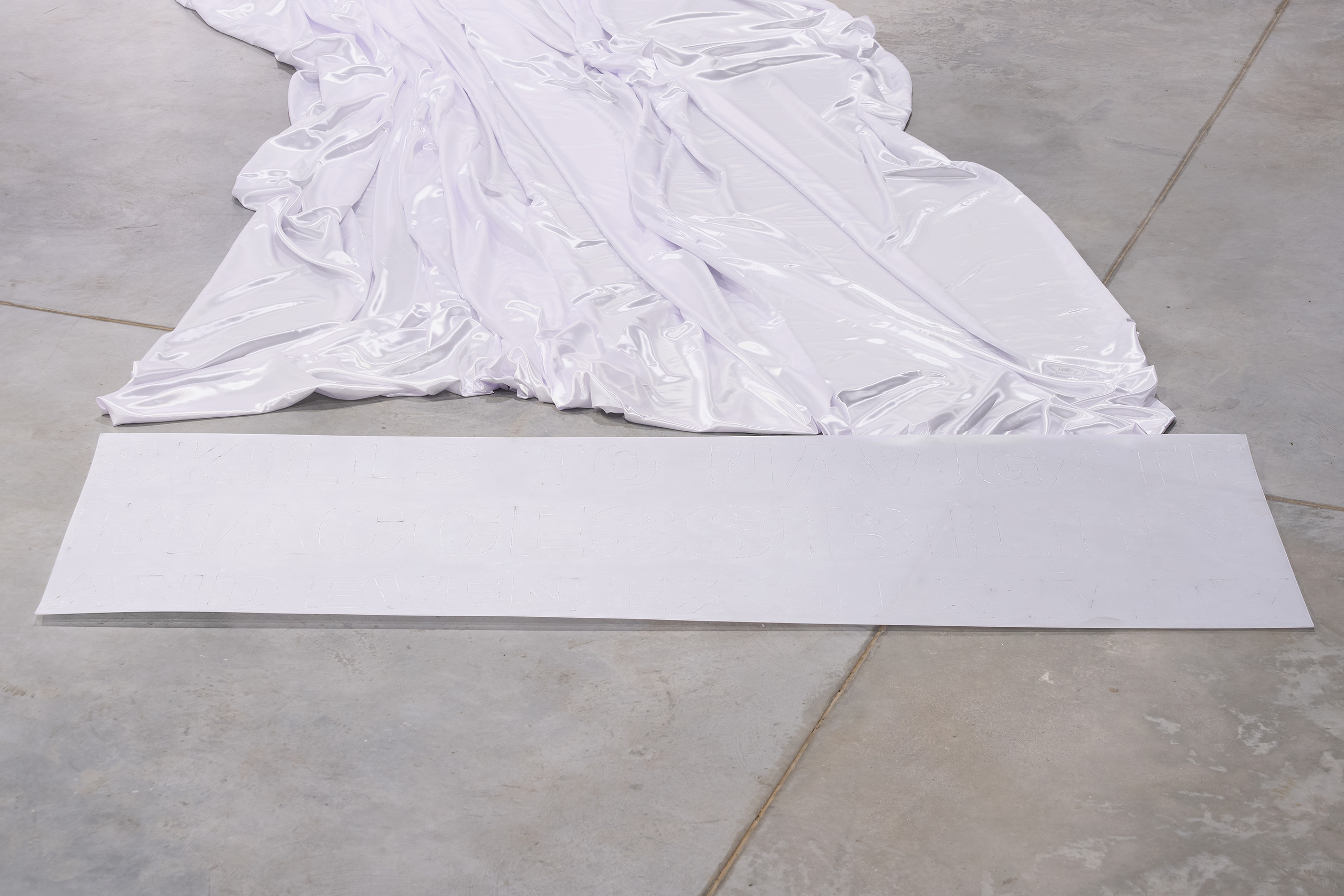
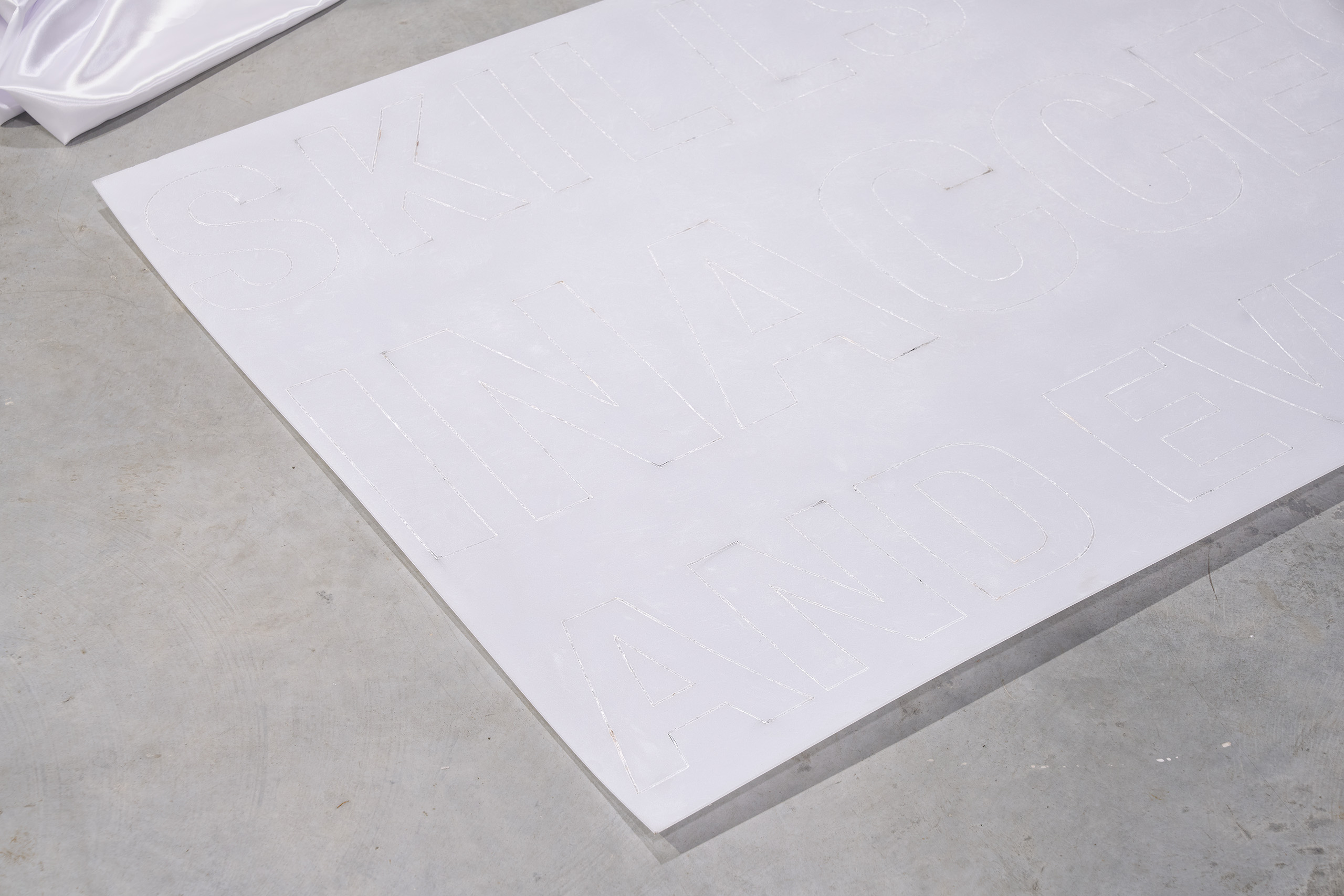
Skills to Navigate Inaccessibility and Even Exclusivity
installation (plexi, satin, dimensions variable)
2025
Every body is unique. Each body experiences differently and sets its boundaries in its own way. This applies to every body—both those that fit into social norms and those that do not align with them. The way we experience our own corporeality depends on the space and system in which we function. We can distinguish many levels of the system: global, regional, local, and micro.
There is a strong interaction between the body and the system—mutual control, adaptation, and attempts at alignment. The body carries identity within it, just as the system does. To be without identity is impossible. Both identities—corporeal and systemic—define each other, depending on the relationship that connects them.
We are not always aware of the rules governing a given system. Sometimes we experience exclusion, feeling that certain spaces are inaccessible to us. We may perceive some phenomena as absurd or abstract, not understanding how they could have occurred. This object speaks of the attempt to imagine our own way of moving in reality—of directing the body in the right direction. Even when we feel lost, when we don’t know the rules of the system, we instinctively find our own way. Our navigation depends on the available resources. We resist the system, follow our own path, and move to present our narrative, with the slogan “We are here, we are queer” in mind—which refers not only to our physical presence, but also the manifestation of corporeality in space and within the system. Here and now—everything depends on how we choose to move.
The main element of the object is the curtain—serving as a metaphor for tension, expectation, and seduction. It draws us into a game of pushing boundaries. It evokes uncertainty and mystery, making it unclear which way and how to move. On the other hand, it introduces an element of fiction—we begin to doubt the truthfulness of our own movements. The boundary between mystery and illusion is extremely thin.
In reality, no one knows what lies behind the curtain or what awaits us there. Each person, drawing on their own resources, must find the right way to move. The curtain hides the secret. However, one can reverse the perspective and look at the person standing on stage with the curtain behind them. They may create an image of free, fluid movement, telling a story of ease in finding the right path. Yet, the curtain behind them may simultaneously conceal all the hardships and efforts put into developing this strategy.
The curtain will always be a boundary—between mystery and fiction, between feigned ease and the real struggle with one’s way of moving. It creates a kind of game, hidden in the folds of the material, spreading downward.
Project realised as part of the exhibition “Common Landscape / Greeting a Stranger” organised by Arsenal Gallery in Białystok.
photo credit: Jan Szewczyk